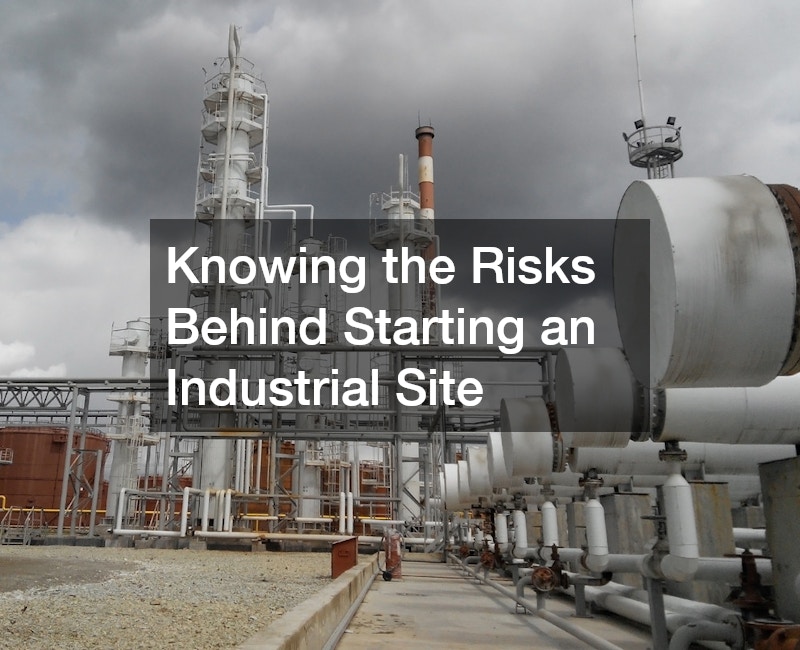
Starting an industrial facility is one of the most ambitious undertakings a business can pursue. Whether launching a manufacturing plant or a regional distribution warehouse, transitioning from a conceptual plan to a physical asset involves immense capital and strategic foresight. For start-ups entering the industrial sector, the potential rewards are substantial: long-term asset value and operational autonomy.
However, the path is fraught with hazards. Unlike commercial office parks, industrial projects operate under stringent environmental, financial, and structural constraints. A single oversight during site acquisition, land preparation, or legal vetting can delay timelines, inflate budgets, or trigger legal liabilities. This guide examines the hazards associated with launching an industrial site, equipping founders with actionable methods to mitigate risks before breaking ground.
Financial and Capital Allocation Risks

Establish Strong Commercial Financing Partnerships Early
Securing funding for an industrial project requires navigating complex lending environments. Industrial developments demand massive upfront capital long before generating operational revenue. When seeking capital for undeveloped parcels, standard commercial lenders impose strict underwriting criteria due to perceived risk. Early-stage enterprises must actively identify specialized financial institutions and banks that offer land loans tailored to industrial development. These lenders understand site development timelines, allowing founders to negotiate flexible draw schedules aligned with actual site work progress.
Once land is secured, transitioning into the construction phase presents another financial milestone. Capital structures often blend equity, construction loans, and debt. Managing commercial mortgages across multiple physical assets requires rigorous financial modeling. Miscalculating debt coverage ratios can leave an enterprise vulnerable to minor supply chain disruptions. Founders must carefully evaluate interest rate structures, debt maturity dates, and debt-to-equity ratios to preserve operational flexibility during initial ramp-up periods.
-
Maintain a dedicated contingency reserve of fifteen to twenty percent to absorb material cost spikes.
-
Negotiate interest-only repayment periods during construction to preserve working capital.
-
Align debt amortization schedules with projected revenue milestones.
-
Establish milestone-based funding releases to maintain healthy cash flow throughout construction phases.
Safeguard Operations Against Unexpected Insolvency Liabilities
Industrial ventures operate within complex business ecosystems where financial distress ripples through contractors and suppliers. A foundational understanding of federal bankruptcy law is essential for corporate officers overseeing large-scale capital deployments. Understanding how creditor priority works and how mechanics liens are enforced enables executives to draft protective clauses in vendor contracts. This knowledge helps safeguard raw material inventories, equipment deposits, and ongoing building construction from vendor litigation.
In the event that a major contractor or land vendor faces severe financial distress during construction, swift legal intervention becomes vital. Establishing a relationship with an experienced local bankruptcy lawyer ensures the enterprise can quickly navigate legal challenges, clear encumbrances, and enforce performance bonds. Local legal counsel provides crucial familiarity with regional court protocols, helping start-ups protect asset titles and prevent costly project halts caused by third-party financial insolvencies.
-
Require all primary contractors to carry performance and payment bonds.
-
Structure progress payments around verified project milestones rather than calendar dates.
-
Insert clear termination and step-in rights into all major vendor contracts.
-
Audit the financial health of critical vendors prior to signing long-term equipment contracts.
Site Selection and Environmental Due Diligence
Engage Industry Experts to Evaluate Property Viability
Selecting an industrial location goes far beyond evaluating proximity to highways. A common mistake is purchasing acreage without confirming whether municipal ordinances permit heavy industrial operations. Retaining comprehensive real estate services specializing in industrial acquisitions allows founders to evaluate potential parcels against local zoning codes, environmental restrictions, and future infrastructure plans. Experienced real estate professionals also assist in negotiating purchase options that allow for conditional due diligence periods before capital is fully committed.
Performing environmental due diligence is equally critical. Industrial properties carry significant liability risks under federal laws, where current owners can be held strictly liable for historical contamination. Performing environmental assessments provides a crucial legal shield under safe harbor provisions. Identifying legacy contamination early allows buyers to negotiate remediation costs, establish environmental escrow accounts, or walk away from high-liability properties altogether.
-
Review historical chain-of-title records to identify prior land uses.
-
Verify that local municipal zoning permits specific planned industrial activities.
-
Identify nearby sensitive environmental zones that could restrict physical expansion.
-
Incorporate environmental indemnity clauses into initial land purchase contracts.
Conduct Thorough Boundary Inspections and Topographical Audits
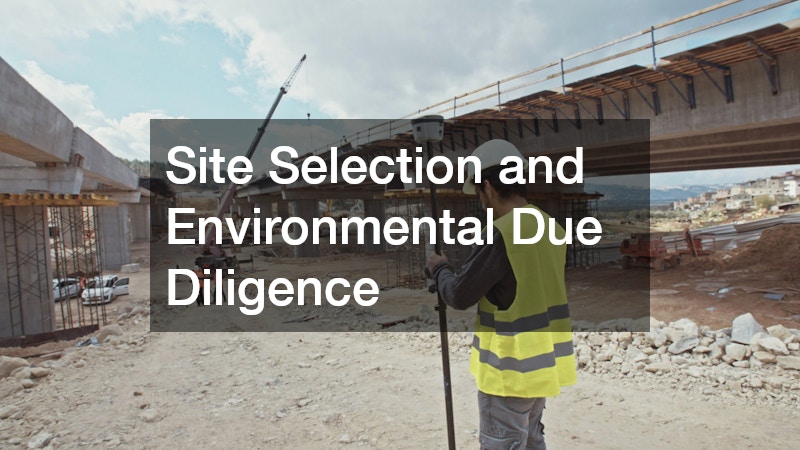
Accurate physical measurements are the bedrock of civil engineering. Operating on inaccurate property line assumptions leads to costly boundary disputes and invalidated building permits. Hiring licensed land surveyors before closing on a land purchase ensures all legal boundaries, rights-of-way, and access easements are precisely documented. Professional spatial mapping guarantees that access drives, storage yards, and utility connections fall within verifiable property boundaries.
Beyond boundary verification, industrial development demands detailed topographical data to inform site design and stormwater management. Understanding slope gradients and elevation variations prevents flooding risks and unexpected earthmoving costs. Accurate elevation data ensures proper surface water drainage, preventing soil erosion around structural footings and heavy machinery pads over time.
-
Order a comprehensive boundary map to reveal unrecorded easements across parcel boundaries.
-
Conduct detailed elevation mapping to identify low-lying zones susceptible to water accumulation.
-
Establish permanent physical monuments on site prior to initiating clearing activities.
-
Confirm public road access rights and verify setback requirements with local planning departments.
Plan Comprehensive Earthwork and Soil Assessment Schedules
Turning raw earth into a stable, buildable pad requires massive physical manipulation. Soil strength and subterranean rock formations dictate foundation feasibility. Contracting reputable excavating companies early in the planning stage allows project managers to acquire accurate quotes for clearing, grading, and utility trenching. Professional earthmovers evaluate soil compaction characteristics and subterranean moisture, ensuring foundations support high-tonnage industrial equipment without settling.
Proper earthwork execution requires systematic soil stabilization. Exposed soil is highly vulnerable to erosion from rainfall, which can wash sediment into local waterways and trigger regulatory fines. Proactive earthwork management prevents delays caused by soil slumping, foundation trench collapse, or emergency environmental remediation during wet weather seasons.
-
Conduct soil borings and geotechnical testing to confirm load-bearing capacity.
-
Balance cut-and-fill volumes on site to minimize dirt hauling expenses.
-
Establish stormwater runoff controls during excavation to maintain regulatory compliance.
-
Schedule major excavation work during historically dry weather windows to minimize downtime.
Facility Construction and Structural Risks
Choose Engineered Structural Systems Designed for Scale
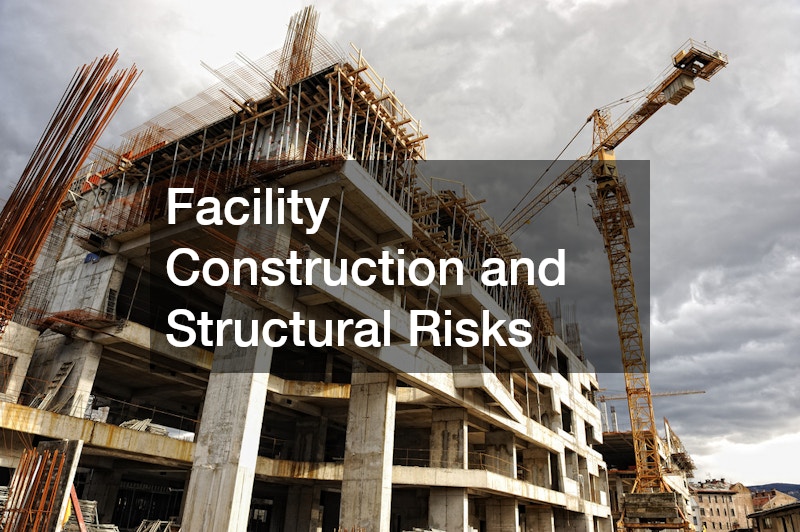
Selecting core structural materials directly impacts construction speed, maintenance costs, and operational versatility. Facilities must accommodate heavy internal cranes, clear-span floor plans, and high ceiling clearances. Utilizing modern metal buildings offers exceptional durability, fire resistance, and floor-plan flexibility compared to traditional masonry structures. Steel systems allow for expansive interior spaces without supporting columns, maximizing usable square footage. Furthermore, steel framing simplifies future expansion if production lines require additional bay space.
-
Engineer foundation slabs with high-strength reinforced concrete designed for heavy point loads.
-
Ensure structural framing includes corrosion-resistant coatings.
-
Design roof trusses with extra load capacity to accommodate overhead material handling equipment.
-
Incorporate modular design principles that allow seamless facility extensions in future years.
Partner With Specialized Manufacturers to Accelerate Construction Timelines
Speed to market is a critical competitive advantage for start-ups. Every month spent in construction represents ongoing capital burn. Partnering with a reputable prefab metal building company allows enterprises to streamline the building process through off-site engineering. Pre-engineered structural components are manufactured in controlled factory environments to precise specifications and shipped directly to the site for rapid assembly. Precision manufacturing minimizes material waste and field rework while reducing total construction labor hours on site.
-
Audit manufacturer quality control certifications before finalizing purchase agreements.
-
Coordinate delivery schedules precisely with excavation teams to prevent raw materials sitting idle.
-
Verify factory-engineered components comply fully with local building codes.
-
Establish strict off-loading protocols to prevent material damage during site delivery.
Integrate Tailored Component Assembly to Support Custom Machinery
Standard pre-engineered structures provide excellent shells, but specialized operations frequently require structural modifications. High-volume manufacturing plants require support platforms, heavy equipment gantries, and mezzanine floors. Incorporating custom metal fabrication into the design phase ensures structural steel, access walkways, and machine mounts are precisely tailored to operational workflows. Custom steel fabrication creates seamlessly integrated production environments, eliminating structural interference with overhead crane paths, utility runs, and ventilation systems.
-
Generate detailed three-dimensional models of processing equipment to identify structural support points.
-
Utilize high-grade structural steel for support structures exposed to corrosive chemicals or heat.
-
Hire certified field welders to integrate custom-fabricated assemblies with primary building frames.
-
Verify vibration dampening measures on custom equipment platforms to protect primary structures.
Regulatory Compliance and Infrastructure Readiness
Audit Utility Capacity and Power Grid Stability Before Breaking Ground
Industrial operations consume vast quantities of electrical power, natural gas, and municipal water. A major risk is assuming local utility grids can automatically support operational demands. Connecting high-draw machinery often requires substantial infrastructure upgrades, such as dedicated substations and three-phase power lines. Early dialogue with utility providers prevents unexpected capital expenditures for dedicated power lines or gas main extensions late in construction.
-
Conduct formal utility capacity studies with local power, gas, and water providers early.
-
Evaluate the need for on-site backup generators to protect sensitive processes from power flickers.
-
Secure industrial wastewater discharge permits before starting facility operations.
-
Evaluate alternative energy solutions to offset heavy peak-hour utility charges.
Establish Environmental and Waste Management Protocols Early
Operating an industrial facility entails ongoing environmental regulatory oversight. Federal, state, and local regulatory bodies enforce strict guidelines regarding air emissions, hazardous waste storage, and noise pollution. Failing to establish compliance frameworks prior to launching operations can lead to immediate shutdown orders and heavy daily fines. Creating thorough containment plans and waste reduction protocols protects local ecosystems while maintaining good standing with municipal oversight authorities.
-
Develop standard operating procedures for chemical handling, storage, and emergency spill response.
-
Install monitoring devices on air discharge stacks and water outlets to maintain compliance records.
-
Train all operational personnel on federal occupational safety and environmental protection guidelines.
-
Build dedicated containment sumps around liquid chemical storage zones to prevent soil contamination.
Supply Chain, Logistics, and Operational Safeguards
Map Transport Routes and Freight Accessibility Across Regional Hubs
An industrial site operates as a vital node within a larger supply chain network. The efficiency of incoming raw material deliveries and outgoing finished product shipments depends heavily on local transport infrastructure. Sites with poor highway access or weight-restricted bridges suffer from elevated freight rates and delayed schedules. Proximity to major transport corridors reduces transit times, lowers fuel surcharges, and ensures reliable access for heavy freight fleets.
-
Analyze regional traffic patterns to ensure smooth ingress and egress for freight trucks.
-
Design site driveways with wide turning radii capable of enduring heavy axle loads.
-
Establish dedicated, secure staging yards to prevent freight trucks from queuing on public roads.
-
Verify seasonal weight restrictions on surrounding secondary roads to prevent transport halts.
Implement Continuous Risk Monitoring and Workforce Safety Standards
Once physical construction concludes and machinery is installed, the primary focus shifts to workforce safety, facility security, and continuous risk management. Industrial environments present inherent physical hazards, including heavy machinery operations, high-voltage electrical distribution, and overhead material handling. Establishing a comprehensive safety culture is vital for protecting workers and preventing costly operational downtime. Comprehensive training programs, routine safety audits, and automated safety shutdowns minimize workplace accidents and keep insurance premiums manageable.
-
Conduct comprehensive job hazard analyses for every operational role to identify physical risks.
-
Install automated fire suppression systems and emergency shut-off controls throughout production areas.
-
Maintain continuous physical security monitoring across all facility access points and inventory storage areas.
-
Schedule periodic safety drills and equipment maintenance checks to ensure emergency readiness.
Launching a new industrial site is a transformative undertaking that requires balancing physical construction, regulatory compliance, financial discipline, and operational execution. The potential failure points are diverse, ranging from hidden soil instabilities and utility capacity shortfalls to complex zoning restrictions and supply chain bottlenecks. Success in this high-stakes environment requires moving beyond optimistic projections and embracing rigorous risk management at every stage of development. By conducting thorough due diligence, partnering with experienced technical experts, structuring resilient legal shields, and prioritizing long-term structural quality, start-up founders can navigate the inherent hazards of industrial site creation. Building a physical industrial footprint demands patience, capital, and precision, but when executed with strategic foresight, it creates a durable foundation for sustained operational growth and enterprise value.