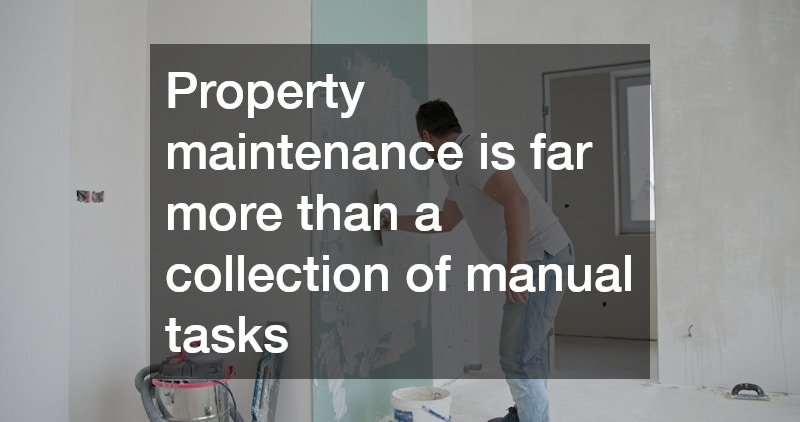
The concept of property maintenance is often viewed through a narrow lens—usually as a list of chores like mowing lawns, fixing leaky faucets, or repainting a fence. However, when viewed through a professional lens, property maintenance is a sophisticated and essential business sector that sits at the intersection of real estate management, logistics, and skilled labor. It is a multi-billion-dollar industry that provides the necessary infrastructure to keep residential, commercial, and industrial properties functional, safe, and aesthetically pleasing.
For an entrepreneur or an investor, understanding property maintenance as a business requires shifting focus from the tools in the truck to the systems, scalability, and long-term value creation that drive the industry.
The Evolution from Handyman to Enterprise
Historically, property maintenance was the domain of the “handyman”—a jack-of-all-trades who worked on a per-task basis. While the handyman model still exists, the modern business of property maintenance has evolved into a structured enterprise. This evolution is driven by the increasing complexity of modern building systems, more stringent safety regulations, and the rising expectations of property owners.
A professional maintenance business does not just react to problems; it manages assets. This involves a comprehensive understanding of a building’s lifecycle. From HVAC systems and electrical grids to structural integrity and landscaping, a maintenance firm acts as the guardian of a property’s market value. By transitioning from a reactive “fix-it” approach to a proactive “manage-it” strategy, these businesses provide a level of reliability that attracts high-value clients, such as homeowners’ associations (HOAs), corporate office parks, and multi-family residential complexes.
Diversifying Revenue Streams
One of the most attractive aspects of property maintenance as a business is the diversity of its revenue streams. Unlike many industries that rely on one-off sales, property maintenance thrives on recurring revenue. This is typically achieved through service contracts where clients pay a monthly or annual fee for ongoing upkeep.
These contracts provide the financial “floor” for the business, ensuring steady cash flow even during economic downturns. On top of this base, businesses can layer specialized projects—such as roof replacements, major renovations, or seasonal upgrades—that offer higher profit margins. By offering a wide array of professional property maintenance services, a company can embed itself into the operations of a client, making it difficult for the client to switch providers and increasing the lifetime value of each customer.
The Importance of Systems and Technology
To scale a maintenance business, one must look beyond the physical labor and focus on operational efficiency. This is where technology plays a transformative role. Modern maintenance firms utilize Computerized Maintenance Management Systems (CMMS) to track work orders, schedule preventive tasks, and manage inventory.
In a business where margins can be tight, efficiency is everything. Technology allows a business owner to optimize routes for their crews, track the time spent on various tasks, and ensure that technicians have the right parts on their trucks before they arrive at a site. This level of organization reduces “windshield time”—the unproductive hours spent driving between jobs—and increases the number of billable hours per day. Furthermore, data collected through these systems allows a business to provide detailed reporting to clients, proving the value of the work performed and justifying contract renewals.
Navigating the Competitive Landscape
The property maintenance market is highly fragmented, ranging from solo operators to massive national corporations. To compete effectively, a business must identify its niche. Some companies focus on high-end residential estates where the emphasis is on meticulous detail and white-glove service. Others target the commercial sector, where the demand for reliable property maintenance services is driven by the need for compliance, tenant retention, and minimizing liability.
Marketing in this space is less about flashy advertisements and more about building a reputation for reliability and trust. B2B (business-to-business) relationships are the lifeblood of the industry. Networking with property managers, real estate agents, and insurance adjusters often yields more consistent leads than traditional digital advertising. In this business, your work is your resume; a well-maintained property serves as a living billboard for the quality of your services.
Workforce Management and Quality Control
Perhaps the greatest challenge in property maintenance is the “people” element. The business is only as good as the technicians in the field. Recruiting, training, and retaining skilled labor is a constant hurdle, especially as the demand for tradespeople continues to outpace the supply.
Property maintenance is far more than a collection of manual tasks; it is a vital, recession-resistant industry that requires strategic planning, technological integration, and a focus on long-term relationships. As the global real estate market continues to expand and age, the need for professional property maintenance services will only grow. For those who approach it with an entrepreneurial mindset—focusing on systems, scalability, and service excellence—property maintenance offers a path to building a stable and profitable business that stands the test of time. Understanding the nuances of this industry allows an owner to move from simply working in the business to strategically building a company that protects the physical world we inhabit.